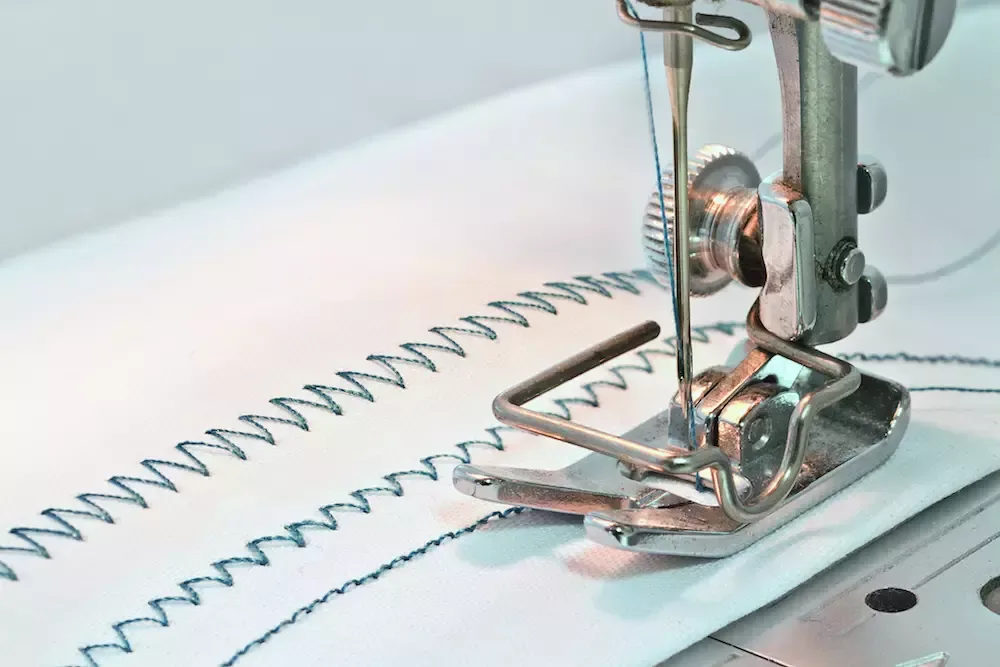
In the modern ready-made garments (RMG) sector, line balancing and machine efficiency dictate profit margins. Choosing between a single needle lockstitch machine and a double needle industrial sewing machine is one of the most critical decisions production managers and mechanical engineering teams make during floor setup. Selecting the right setup impacts seam strength, cycle time per garment, energy consumption, and overall operator efficiency. As a leading garments machinery supplier in Dhaka, RMB Trading Solution provides engineered solutions to optimize your sewing lines for maximum throughput and flawless stitch quality.
Understanding the Technology & Operational Impact
To optimize your production lines, it is essential to understand the underlying mechanical mechanisms and operational trade-offs of both single and double needle platforms.
Single Needle Lockstitch Machinery
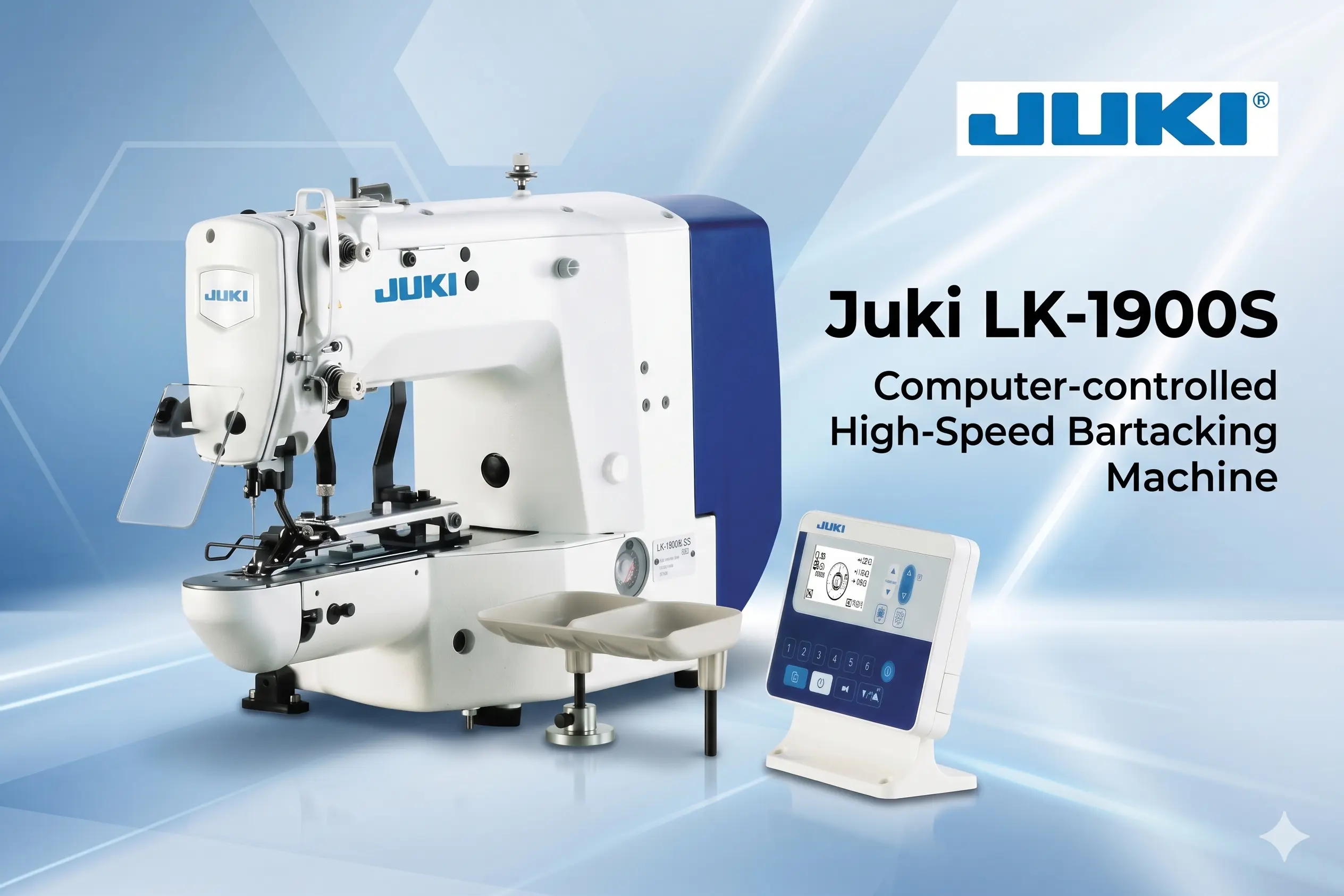
The standard single needle machine utilizes a single upper thread and a bobbin thread to form an ISO 301 lockstitch. Operating at speed capacities up to 5,000 RPM, these machines feature precision-engineered rotary hooks and thread take-up levers designed for versatile stitch formation across light to heavy woven and knitted fabrics. Single needle units excel in flexible operations such as collar setting, pocket attaching, side seaming, and general assembly. Their mechanical simplicity ensures low maintenance overhead and effortless adjustment of thread tension, stitch length, and presser foot pressure.
Double Needle (Twin Needle) Lockstitch Machinery
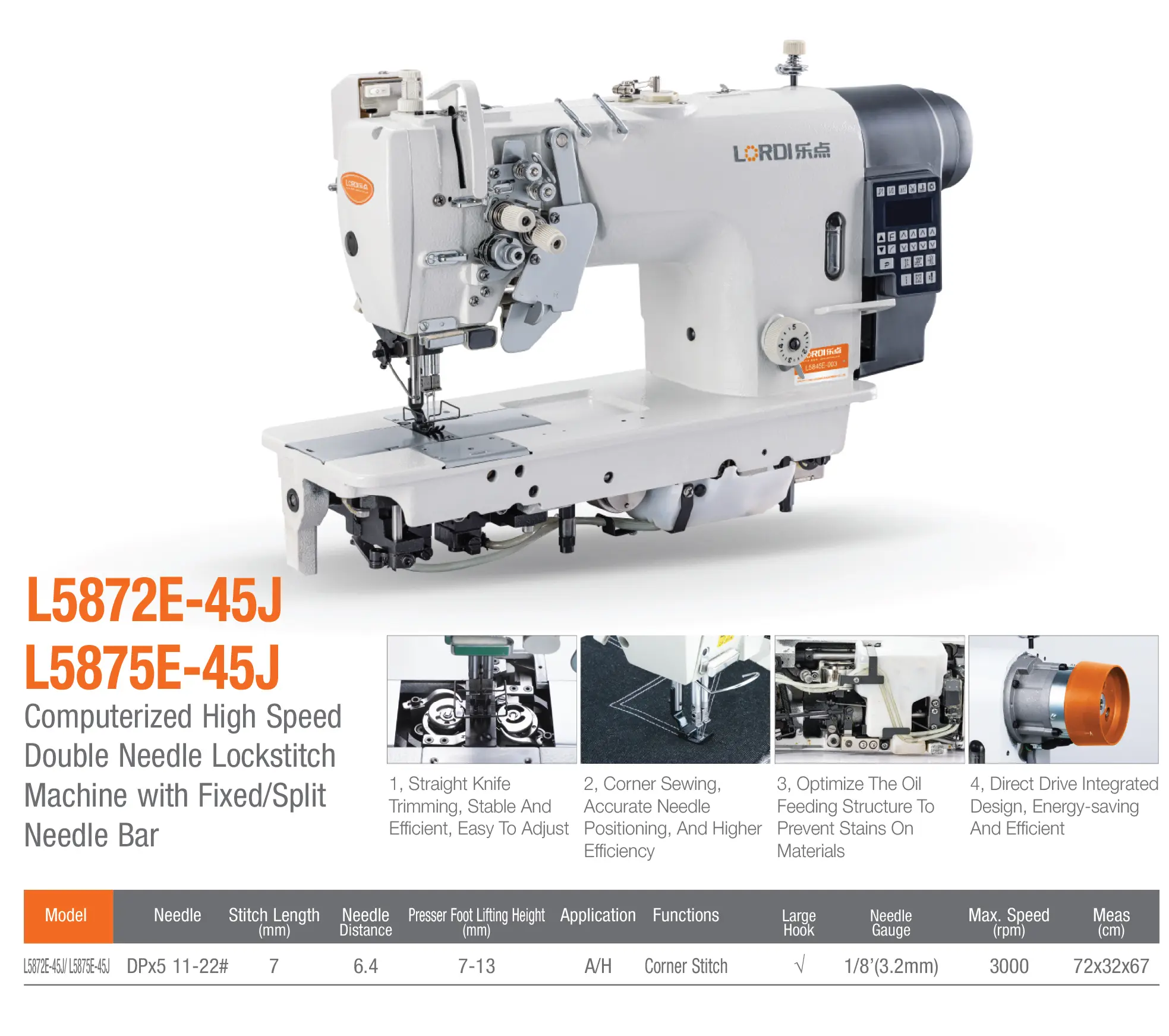
Double needle industrial sewing machines integrate dual needle bars, twin rotary hooks, and separate thread tension assemblies to sew two parallel rows of lockstitches simultaneously. Specialized variants, such as split needle bar machines, allow technicians to disengage one needle during angular or corner stitching (ideal for flap pockets, collar corners, and decorative waistband seams). While requiring precise needle timing, exact hook clearance adjustments, and double thread tension management, twin needle machines eliminate double-pass operations, reducing labor time by up to 50% on operations like lap seam joining, inseams, and hem reinforcing in heavy denim, workwear, and sportswear lines.
Key Features and Technical Specifications
When upgrading your floor with modern high-performance machinery, evaluate these critical operational parameters:
- High-Speed Performance: Precision stitch consistency is maintained even at maximum velocity. Advanced high speed lockstitch and overlock machine models from RMB Trading Solution incorporate dynamic balance mechanisms that eliminate vibration, ensuring uniform needle penetration and zero skipped stitches across varying fabric densities.
- Energy Conservation: Equipping your shop floor with a direct-drive energy saving servo motor for garments reduces electricity consumption by up to 60-70% compared to traditional clutch motors. Servo motors provide instant stopping accuracy, adjustable speed limits, precise needle positioning, and silent operational parameters.
- Durability & Build: Constructed with industrial-grade alloy casting, micro-finish needle bars, and hardened alloy steel rotary hooks, modern industrial sewing machine in Bangladesh installations are built to withstand 24/7 high-intensity factory operations.
Best Maintenance Practices for Maximum Machine Uptime
Preventative maintenance is paramount to preventing costly line downtime and fabric ruin. Mechanical technicians should follow strict technical protocols:
1. Rotary Hook Timing and Clearance Calibration
Ensure hook point-to-needle timing is set precisely. For single needle machines, set the clearance between the hook point and needle scarf between 0.05mm and 0.1mm. For double needle units, calibrate both left and right hooks symmetrically to avoid thread fraying or skipped stitches on heavy seams.
2. Lubrication and Oil Filtration
Ensure modern automatic force-lubrication systems maintain proper oil flow to the needle bar assembly and rotary hook. Regularly check oil reservoirs, inspect oil pump filters, and replace discolored oil every 6 months to minimize metal friction and thermal expansion of internal shafts.
3. Tension Spring Calibration & Feeding Synchronization
Calibrate check spring height and tension depending on thread thickness (e.g., core-spun vs. spun polyester). Synchronize the feed dog movement with the needle bar position to ensure smooth material feeding without puckering fine fabrics or dragging heavy denim.
4. Use Genuine Replacement Parts
Substandard needles, worn bobbins, or low-grade feed dogs cause uneven thread tension, needle breakage, and hook damage. Always source genuine sewing machine spare parts and service to ensure dimensional accuracy and prolong gear life.
Why Partner with RMB Trading Solution?
At RMB Trading Solution, we understand that garment manufacturers in Bangladesh require reliable automation, high energy efficiency, and immediate technical assistance to stay competitive globally. As the trusted garments machinery supplier in Dhaka, we supply state-of-the-art machinery equipped with direct-drive energy saving servo motor for garments technology, full warranty coverage, complete factory line planning, and robust inventory of genuine spare parts.
Whether you need a full line of high speed lockstitch and overlock machine units or custom twin-needle setups for denim production, our senior engineering team delivers tailored technical solutions for maximum ROI.
Contact RMB Trading Solution: Visit our showroom in Dhaka or contact our technical team today for custom machinery consultations, plant layout planning, and competitive bulk quotations.